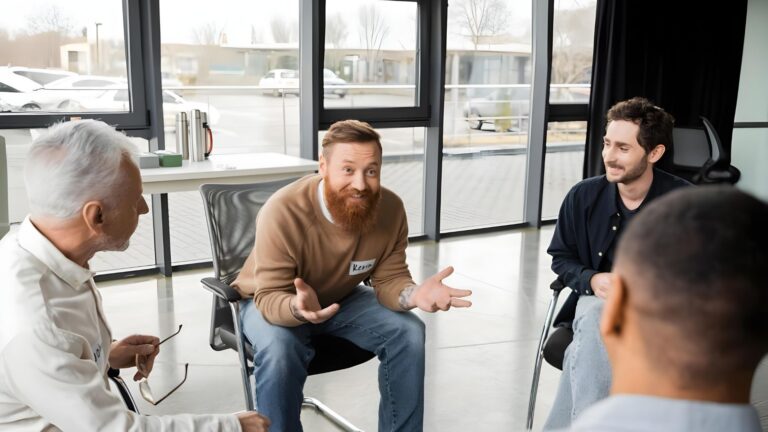
Starting therapy in a social setting can feel uncertain at first, but it’s also one of the most rewarding paths to healing. Group therapy is a form of psychotherapy that allows individuals to grow through shared experiences, mutual support, and guided self-reflection.
In this article, we’ll break down the stages of group therapy, showing how each phase supports emotional growth, builds trust, and fosters lasting change.

The Forming Stage: Orientation and Group Development
Also referred to as the orientation stage or initial stage, this phase focuses on introductions, goal setting, and establishing meeting norms. Members of the group often feel uncertain about the social setting and their roles within the gathering.
In this early stage, the group leader plays a crucial role in creating a safe space for open dialogue and laying the groundwork for trust. Members start to define themselves through sharing basic information, and exploring the structure of the therapy sessions. Group therapy can provide both support and discomfort at this point, as members may hesitate to express their feelings openly.
The Storming Stage: Conflict and Transition
The storming stage, also known as the transition stage, is often the most difficult stage in group therapy. It is characterized by resistance, anxiety, or conflict as participants begin to assert their personalities and expectations.
During this stage, group dynamics become more visible. Members may challenge the leader of the meetings or question the therapeutic process. This is a normal and expected part of community development. Group members may express frustration, test boundaries, or experience tension as they adjust to working together. However, this storm allows the community to work through discomfort and start forming authentic connections.
The Norming Stage: Cohesion and Group Counseling Work
As group therapy progresses into the norming stage, trust and collaboration begin to emerge. This third stage is where group cohesion strengthens, and the participants become more unified.
Members feel safer expressing their emotions and ideas. Roles within the gathering become more defined, and norms are accepted. Group therapy work deepens in this phase, allowing members to support each other, share vulnerabilities, and practice coping strategies. The leader continues to facilitate but may take a less directive role as members become more active in guiding sessions.

The Performing Stage: Working Toward Goals
Also known as the working stage, this is where the therapeutic process reaches its most productive phase. Therapy participants begin to take ownership of the work, both individually and as a team. The group is a safe space for honest dialogue, growth, and exploration.
Group members start to explore deeper emotional issues, support others in the community, and experiment with new ideas and behaviors. Therapy groups at this stage are marked by active participation in activities and high levels of communal productivity. Progress evaluation of members occurs naturally through their contributions and breakthroughs. The working stage and the final stage represent the peak of personal and collective development.
The Termination Stage: Closure and Reflection
The termination stage, or adjourning stage, is the final stage involves wrapping up tasks, acknowledging growth, and preparing for the end of this shared experience. Feelings of loss, sadness, or anxiety may emerge as members prepare to part ways.
This stage is essential in helping members reflect on their journey and reinforce the skills they’ve gained. The leader of the group facilitates the closure process and helps members process the transition. Coping strategies for continuing growth outside of this social setting are also discussed. Group therapy allows for meaningful closure, reinforcing the emotional and behavioral progress achieved throughout the therapy sessions.
Final Thoughts from Radix Recovery
The stages of group therapy highlight how relationships, trust, and progress evolve within a social environment. Knowing what to expect can make the journey feel more structured and supportive from start to finish.
At Radix Recovery, we recognize that successful group therapy work depends on a well-guided, structured approach. Our experienced team of group therapists in Cedar Rapids, Iowa ensures each stage is managed with care, allowing participants to grow, connect, and heal through every phase of the collective experience.