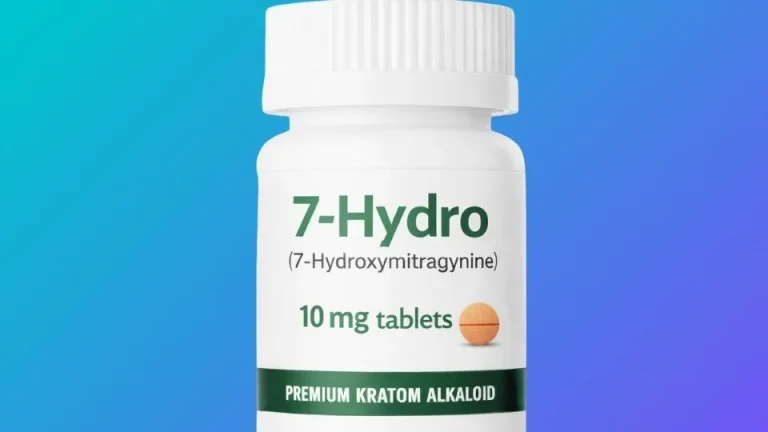

7-OH, short for 7-hydroxymitragynine, is an emerging substance that has drawn urgent attention from federal regulators. Sold in concentrated tablets, gummies, and shots and often marketed as a legal wellness product, it is in fact a potent opioid agonist that has shown greater potency than morphine in several laboratory and animal models. As these products spread through gas stations and smoke shops, understanding what 7-OH actually is has become important for anyone concerned about their health or a loved one’s.
This guide breaks down what it is, how strong it is, its risks, and its shifting legal status. If 7-OH or another opioid-like has become hard to control, our addiction therapy program can help. This article is part of our broader opioid addiction resource library. For those who need clinical supervision, medical detox in Iowa is available in Cedar Rapids.

What Is 7-OH?
7-OH is an active metabolite and minor alkaloid of mitragynine, the main psychoactive compound in the kratom plant. In the natural leaf, it is present only in tiny amounts, generally around 0.01 to 0.04 percent by dry weight, but it has substantially greater potency than mitragynine at mu-opioid receptors and demonstrates stronger agonist activity in several laboratory models [1]. The products causing concern are not simple ground kratom leaf. They are concentrated and likely semi-synthetic preparations, produced by chemically oxidizing mitragynine, that deliver far more 7-OH than a person would ever get from traditional kratom. That is what makes them so much more powerful and risky. Our overview of 7-OH tablets, their effects, and what to expect looks at these products in more detail.
How Potent Is 7-OH?
The core concern with 7-OH is its strength, though it is important to understand where the numbers come from. In one laboratory tissue assay, 7-OH was approximately 13 times more potent than morphine. Other preclinical studies have also found greater potency than morphine, but a human dose-equivalence ratio has not been established, and controlled human research on isolated 7-OH remains very limited [2]. In a preclinical respiratory study, 7-OH produced respiratory depression at lower doses than morphine, with the FDA describing it as more than three times as potent for that outcome. Fatal and nonfatal overdoses involving 7-OH have been reported, although available toxicology data often cannot establish whether 7-OH was the sole or primary cause of death. The table below shows how it compares with the plant it comes from and with a familiar opioid.
| Substance | What It Is | What Research Shows |
| Botanical kratom leaf | Plant material containing mitragynine, trace 7-OH, and many other alkaloids | Produces opioid-like and other effects, but generally exposes users to far less 7-OH than concentrated products |
| 7-OH | Minor kratom alkaloid and mitragynine metabolite, often concentrated or semi-synthetically produced | More potent than morphine in several preclinical models, about 13 times in one tissue assay |
| Morphine | Prescription opioid and full mu-opioid receptor agonist | Used as a comparator in laboratory and animal studies |
Talk With Radix Recovery Today
Get confidential guidance and learn whether flexible, structured outpatient treatment is the right next step for your recovery.
Intensive Outpatient Program in IowaWhy 7-OH Is Concerning

The FDA has warned that products labeled as 7-hydroxymitragynine have not been shown to be safe or effective for any use, and it has taken enforcement action against companies selling them [3]. Importantly, the FDA has stated that concentrated 7-OH cannot lawfully be sold as a dietary supplement ingredient or added to conventional food, and no FDA-approved drug contains 7-OH. Part of the problem is how these products are packaged and sold. They often appear as everyday consumer goods rather than drugs, including:
- Tablets and capsules
- Gummies and candies
- Drink mixes and powders
- Liquid shots and dissolvable strips
Marketed as legal, natural, or useful for pain, anxiety, mood, or opioid withdrawal, these products can give a false sense of safety. In reality, the identity, purity, and concentration of ingredients may be unknown or inconsistent, so someone can take a far larger opioid dose than they realize.
Is 7-OH Legal?
The legal status of 7-OH is changing quickly, and there are two separate questions: controlled-substance scheduling and FDA product rules. Botanical kratom and the trace 7-OH in the leaf are not federally scheduled and remain legal in many states, though state laws vary. Concentrated 7-OH products are the specific target of federal action. As of August 3, 2026, the DEA had published notices of intent to temporarily place 7-OH above a set threshold, along with several synthetic derivatives, into Schedule I, but those temporary Schedule I orders had not yet taken effect and could not be issued before August 5, 2026 [4].
Crucially, not being federally scheduled does not mean a product is lawfully marketed. The FDA already considers concentrated 7-OH unlawful when sold in foods, dietary supplements, or as an unapproved treatment. Because this area is evolving, check the latest federal and state rules rather than assuming a product is safe or legal simply because it is on a shelf.
Risks and Side Effects
Because 7-OH is an opioid agonist, its risks mirror those of other opioids and can be serious. Reported effects include:
- Slowed or shallow breathing, which can become fatal respiratory depression
- Heavy sedation, dizziness, and confusion
- Nausea, vomiting, and constipation
- Anxiety, depression, insomnia, and, in some reports, seizures
- Physical dependence with regular use
- Overdose, especially given unpredictable product strength
Because isolated 7-OH has not been extensively studied in humans, the frequency and dose-response relationship of these effects are not yet well defined. Because 7-OH has opioid-like respiratory effects, combining it with alcohol, benzodiazepines, other opioids, or additional sedatives is expected to increase the risk of dangerous sedation and breathing problems. If someone shows signs of an opioid overdose, such as very slow or stopped breathing, blue-tinged lips, or unresponsiveness, call 911 immediately. Give naloxone if available, begin rescue breathing or CPR as directed, and stay with the person until emergency responders arrive, since naloxone can reverse opioid effects but more than one dose may be needed. More detail on this sits in the opioid addiction guide.
Dependence and Withdrawal
With repeated use, the body adapts to 7-OH and can become physically dependent, so stopping brings opioid-style withdrawal. Symptoms often include anxiety, restlessness, muscle aches, sweating, nausea, diarrhea, insomnia, and strong cravings. Withdrawal may begin within hours to a few days after the last dose, but a reliable 7-OH-specific timeline has not yet been established. Opioid-style withdrawal is usually not directly life-threatening, but it can cause serious complications and strongly increase the risk of returning to use or overdosing after tolerance falls. Our guide to 7-OH withdrawal warning signs and safe detox options and our overview of why opiate detox needs supervision explain what to expect and why medical oversight helps.
For a general sense of how opioid-type withdrawal unfolds, our detox timeline by substance explains when symptoms usually start, peak, and fade.
Getting Help and Treatment
Because 7-OH produces opioid-like effects, clinicians generally apply established opioid withdrawal and opioid use disorder treatment principles, although research specifically on 7-OH treatment remains limited, with emerging case reports supporting buprenorphine. Treatment usually begins with a clinical assessment and, when needed, medically supervised detox to manage withdrawal safely. For opioid use disorder, FDA-approved medications include buprenorphine, methadone, and naltrexone; all can reduce illicit opioid use, while buprenorphine and methadone have particularly strong evidence for reducing overdose mortality. Detox alone is not considered adequate treatment because of the high risk of returning to use [5]. Counseling, cognitive behavioral therapy, and support for any co-occurring conditions round out care. Our guides on medication-assisted treatment for opioid use disorder, the best opioid detox treatment options, the 8 opioid use disorder symptoms, and therapy for opioid use disorder explain what recovery can look like.
Frequently Asked Questions
Is 7-OH the same as kratom?
Not exactly. 7-OH is one of the compounds associated with kratom, present naturally in trace amounts, but concentrated 7-OH products are chemically and pharmacologically different from ordinary botanical kratom leaf. Those concentrated products can deliver far more 7-OH than the plant and behave much more like strong prescription opioids.
Is 7-OH an opioid?
Yes. 7-OH acts on the brain’s mu-opioid receptors, the same targets as morphine and oxycodone, and preclinical research indicates it is a potent mu-opioid agonist. It can produce opioid-type risks, including sedation, dependence, withdrawal, respiratory depression, and overdose, though its full human safety profile is still not well understood.
Is 7-OH legal?
The status is changing. As of August 3, 2026, the DEA had issued notices of intent to schedule concentrated 7-OH, but those orders had not yet taken effect. Even so, the FDA already considers concentrated 7-OH unlawful in foods, supplements, and unapproved drugs, so check current federal and state rules.
Final Thoughts from Radix Recovery
7-OH may be sold as a legal, natural product, but concentrated forms are potent opioid products with real potential for dependence, respiratory depression, overdose, and involvement in fatal poisonings, and they are now the focus of serious federal concern. If you or someone you love is using 7-OH or struggling with any opioid, help is available. At Radix Recovery in Cedar Rapids, Iowa, our team can assess your needs and connect you with appropriate medical and medication treatment resources when clinically indicated, so you do not have to face recovery alone.
Sources
- National Library of Medicine (PMC), “From Kratom to 7-Hydroxymitragynine: Evolution of a Natural Remedy Into a Public-Health Threat.” https://pmc.ncbi.nlm.nih.gov/articles/PMC12671409/
- U.S. Food and Drug Administration (FDA), “7-Hydroxymitragynine (7-OH): An Assessment of the Scientific Data and Toxicological Concerns Around an Emerging Opioid Threat.” https://www.fda.gov/files/drugs/published/7-hydroxymitragynin_7-oh_an_assessment_of_the_scientific_data_and_toxicological_concerns_around_an_emerging_opioid_threat.pdf
- U.S. Food and Drug Administration (FDA), “Hiding in Plain Sight: 7-OH Products.” https://www.fda.gov/news-events/public-health-focus/hiding-plain-sight-7-oh-products
- U.S. Drug Enforcement Administration / Federal Register, “Schedules of Controlled Substances: Temporary Placement of 7-Hydroxymitragynine Above a Specified Threshold in Schedule I.” https://www.federalregister.gov/documents/2026/07/06/2026-13580/schedules-of-controlled-substance-temporary-placement-of-7-hydroxymitragynine-above-a-specified
- Substance Abuse and Mental Health Services Administration (SAMHSA), “Medications for Opioid Use Disorder, TIP 63” (NCBI Bookshelf). https://www.ncbi.nlm.nih.gov/books/NBK535270/