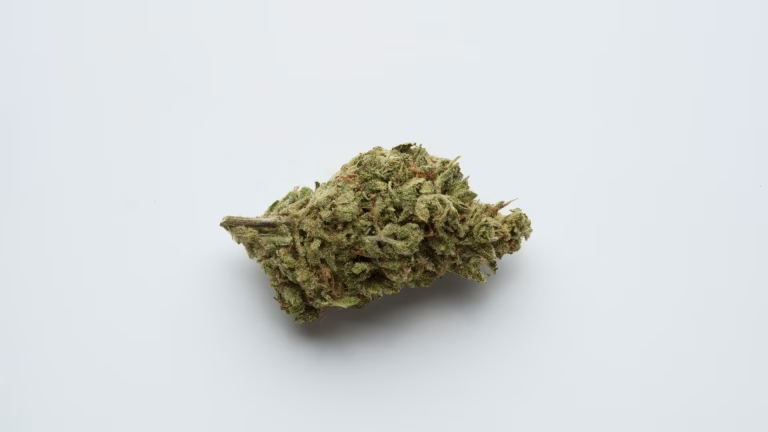
THC edibles can feel like the “easy button” for some cannabis users because of the lack of smoke or smell. However, your brain does not experience THC edibles the same way it experiences inhaled cannabis. For some adults, that difference matters, especially if you have certain health conditions or a history of certain ones like seizure disorders. This guide breaks down seizure types, seizure symptoms, and warning signs, then explains why THC gummies may raise seizure risk for some people. You will also learn what to do if a seizure lasts more than five minutes, how the ictal phase and postictal phase can look in real life, and how to make safer choices if you still plan on using THC edibles.
Quick Takeaways
- THC edibles can hit later and harder than you expect, which can increase the chance of overconsumption and side effects-
- Seizures involve abnormal electrical activity in the brain, and seizure types include generalized seizures and focal seizures-
- High THC exposure has been reported alongside increased seizure frequency or breakthrough seizures in some cases, especially in vulnerable people-
- A seizure that lasts longer than 5 minutes, or multiple seizures without recovery, is a medical emergency-
What Additional Health Risks Do THC Edibles Pose?

THC edibles pose unique health risks due to their delayed onset, which often leads users to consume dangerously large amounts while waiting for effects. This may increase the risk of acute cannabis intoxication, causing severe anxiety, paranoia, and psychosis. Edibles are also frequently mistaken for regular food, making accidental ingestion by children a serious public health concern.
Be Wary That THC Edibles Can Feel More Intense Than You Planned
THC edibles often take longer to kick in because they go through digestion and liver metabolism, which delays onset and can lengthen the experience. Some people feel effects in 30 minutes, others closer to 2 hours, and the total duration can stretch much longer than inhaled cannabis. This can have various consequences, including:
- Delayed onset (taking a longer time to feel the effects of marihuana) makes accidental high dosing easier-
- Longer duration means side effects like dizziness, nausea, anxiety, or headache can hang around during work, driving, or parenting time-
- The effects can be more intense than inhaled cannabis because THC is converted to 11-hydroxy-THC in the liver, which is more potent and crosses into the brain more readily-
Seizure Types, Symptoms, and Phases
While cannabis is sometimes explored as a treatment for certain seizure disorders, high-dose THC consumption through edibles can paradoxically trigger seizures in vulnerable individuals. The unpredictable potency of edibles makes accidental overconsumption common, causing sudden spikes in THC blood levels. Those with epilepsy, a history of seizures, or underlying neurological conditions face the greatest risk and should exercise particular caution with edibles.
Seizures affect the brain when electrical activity becomes disorganized. In everyday terms, that can look like a blank stare, lip smacking, jerking movements, body stiffness, or losing awareness. Clinically, types of seizures are often grouped into focal seizures (starting in one area) and generalized seizures (involving both sides early).
Common seizure types you may encounter:
- Focal onset aware seizures (you are awake, but something feels “off”)
- Tonic seizures (muscles stiffen) and clonic seizures (rhythmic jerking)
- Absence seizures (petit mal seizures) with a brief blank stare
- Atonic seizures (drop seizures) with sudden loss of tone
- Tonic clonic seizures, also called grand mal seizures or called grand mal seizures in older language
A useful way to picture the timeline:
- Ictal phase: the seizure itself
- Postictal phase: the “after” period that can include confusion, fatigue, headache, and soreness
Convulsive status epilepticus (CSE) is commonly treated as a life-threatening emergency when a tonic-clonic seizure lasts longer than 5 minutes or when seizures repeat without recovery.
Why THC Edibles May Raise Seizure Risk for Some People
Not everyone will have seizures from THC edibles. But the risk story gets real for certain people, at certain doses, in certain contexts. A scoping review from 2022 found that ten out of eleven studies that met review criteria supported the idea that seizures may have an increased risk among certain populations in the setting of cannabis exposure. The review concluded that THC is a possible proconvulsant (lowers seizure threshold) in some situations, but acknowledged there isn’t yet a clear scientific consensus on the topic.
Some factors that might increase your risk you should watch out include:
- Sleep deprivation, illness, dehydration
- Low blood sugar
- Head injury or older brain injuries
- Certain medications (including some that also affect the nervous system)
What To Do if a Seizure Happens After THC Edibles
If you are with someone who is seizing after THC edibles, you do not need to diagnose seizure types in the moment.
Do this immediately:
- Time it. If the seizure lasts more than five minutes, treat it like a medical emergency.
- Protect their head (especially if there was a fall or car accidents risk earlier in the day).
- Turn them on their side if possible and safe.
- Move sharp objects away.
- Do not put anything in their mouth.
Call 911 if:
- Seizure lasts longer than 5 minutes
- Breathing looks abnormal, injury occurred, or they do not regain awareness between episodes (repeated seizures)
- It is their first seizure, they are pregnant, or they have diabetes and you suspect blood sugar issues
After the seizure ends (postictal phase), expect confusion and exhaustion. This is the moment many people panic and take more substances to “fix” how they feel. Do not. Hydrate, keep the environment quiet, and get medical guidance.
Seizure Types and Red Flags
Recognizing different seizure types helps you respond appropriately and know when to seek emergency help, especially since cannabis withdrawal can trigger various patterns.
| Type or pattern | What you might see | Why it matters |
|---|---|---|
| Focal onset aware seizures | Odd smell/taste, lip smacking, twitching in one muscle, awareness mostly intact | Can progress, easy to miss as “just being high” |
| Focal seizures with impaired awareness | Confused, cannot respond, blank stare | Safety risk, especially near stairs or water |
| Generalized seizures | Lose consciousness, body stiffness, jerking movements | Higher injury risk, may need emergency care |
| Status epilepticus risk | Seizure lasts >5 minutes OR repeated seizures without recovery | Medical emergency |
Who Else Should Be Extra Cautious With THC Gummies?

If you are wondering, “Is this about me?” here are the groups where extra caution is warranted. Health conditions and histories that raise concern include:
- Known seizure disorders or neurological disorders (including epilepsy)
- Prior brain injuries or a recent head injury
- A first seizure in the past, or more than one seizure without a known cause
- Unprovoked seizures, increasing seizure frequency, or a recent second seizure
- Mixing THC edibles with alcohol or certain medications
Warning signs you should not ignore:
- New seizure symptoms like unexplained blank stare, lip smacking, or one muscle twitching that spreads
- Loss of awareness, confusion, or loss of consciousness
- Repeated episodes in one night (multiple seizures)
FAQs About THC Edibles
Can THC edibles cause seizures?
Yes, the edibles may trigger seizures in users, especially with high doses, sleep loss, or underlying seizure disorders. Evidence of this includes reports of seizures associated with cannabis exposure and case reports linking cannabis timing with breakthrough seizures. However, research is still being done to get a consensus on THC’s risk as a proconvulsant in certain situations.
Can weed help seizures or make them worse?
Cannabis is complicated. Some epilepsy discussions focus on CBD, while high-THC products can be risky for certain people. If you have epilepsy or neurological disorders, talk with your clinician before experimenting, because your seizure treatment plan and seizure frequency matter more than internet anecdotes.
What should you do after a seizure from THC gummies?
If it was a first seizure, if the seizure lasts more than five minutes, or if there were multiple seizures without recovery, get emergency care. Afterward, write down dose, timing, and symptoms, and share that with a medical professional to guide next steps and testing.
Choosing Recovery At Every Level With Radix
THC edibles are not automatically dangerous, but they are easy to underestimate. When you combine delayed onset with high THC, certain medications, sleep loss, or pre-existing seizure disorders, seizures may become a real risk. Knowing seizure symptoms, seizure types, and warning signs gives you a safer path, whether you are choosing moderation, choosing abstinence, or choosing treatment. If cannabis addiction is starting to run your schedule, your mood, or your health, Radix Recovery offers medically supervised detox on-site and structured, evidence-based treatment designed to support long-term recovery through a connected continuum of care. Reach out to our admissions team to get started on a whole recovery from the root up.