Now accepting new clients across Iowa most insurance accepted.(319) 270-2890
Motivational interviewing (MI) is a collaborative counseling style that resolves your ambivalence about substance use by drawing out your own reasons for change, never by lecturing or confronting you. At Radix Recovery in Cedar Rapids, Iowa, MI is not a separate session you book. It is the clinical communication style woven through every program we offer, from your first admissions call through alumni aftercare, and it is included in every level of care, never sold separately.
Last Reviewed
July 2026
Some treatment centers treat therapy like a feature list: a base program with modalities bolted on as line items. We built Radix the other way around, because treatment works when it is comprehensive and sustained, not assembled piecemeal. Therapy is the spine of every program, and the program is what you enter. Here is how that integration works across our continuum.
Motivational interviewing was first described by psychologist William R. Miller in 1983, in his work with problem drinking, and developed with Stephen Rollnick into the approach now laid out across four editions of Motivational Interviewing: Helping People Change.[1]
MI's target is ambivalence, the genuine back-and-forth of “I want to stop” and “I am not ready.” That is not a character flaw, it is the normal psychology of change, and MI resolves it by drawing out your own reasons for change rather than arguing you into them.
NIDA's Principles of Drug Addiction Treatment lists motivational approaches among the behavioral therapies that work,[2] and SAMHSA dedicated an entire federal protocol, TIP 35: Enhancing Motivation for Change, to motivational counseling in substance use treatment.[3]
MI is one of the evidence-based modalities in our addiction therapy program, included in every level of care, never sold separately.
The full continuum of care at Radix Recovery includes Residential Inpatient Treatment with 30, 60, or 90-day pathways, Partial Hospitalization Program (PHP) for comprehensive day programming, and Intensive Outpatient Program (IOP) three days per week, plus outpatient care and medication management.
Because every level of care at Radix is delivered by a connected clinical team, residents do not start over when they move from detox to residential to outpatient. It is one of the reasons families choose Radix for alcohol and drug rehab in Iowa.
Our whole clinical program is built on NIDA’s principles of effective treatment. Select each to see how we apply it:
A partnership between equals. We work with you, not on you, and you stay in the driver's seat the whole way.
In practice →Your reasons for change already exist inside you. MI draws them out instead of installing ours from the outside.
In practice →The choice is always yours. Owning the decision yourself is what makes a change actually hold over time.
In practice →There’s no single best therapy for addiction. The best one is whichever fits your situation. Cognitive behavioral therapy (CBT) has the strongest overall evidence, teaching you to manage triggers and cravings. Motivational interviewing helps if you’re ambivalent about change, while contingency management, DBT, and family therapy each fit different needs. Most people combine approaches.
There is no MI hour on a schedule. MI is the style your whole care is delivered in, the same evidence-based, whole-person. Here is where you will feel it:
From the very first call the conversation is collaborative, no pressure, no lectures, no commitment required just to talk.
Your therapist introduces change talk, helping you put your own reasons for change into words and build on them.
Group is run by rolling with resistance, not arguing with it, so defensiveness has nothing to push against.
Families learn the MI style too, so conversations at home stop sounding like lectures and start drawing each other out.
At each step-down, when motivation predictably dips, the MI style re-engages you instead of assuming you will stay motivated on your own.
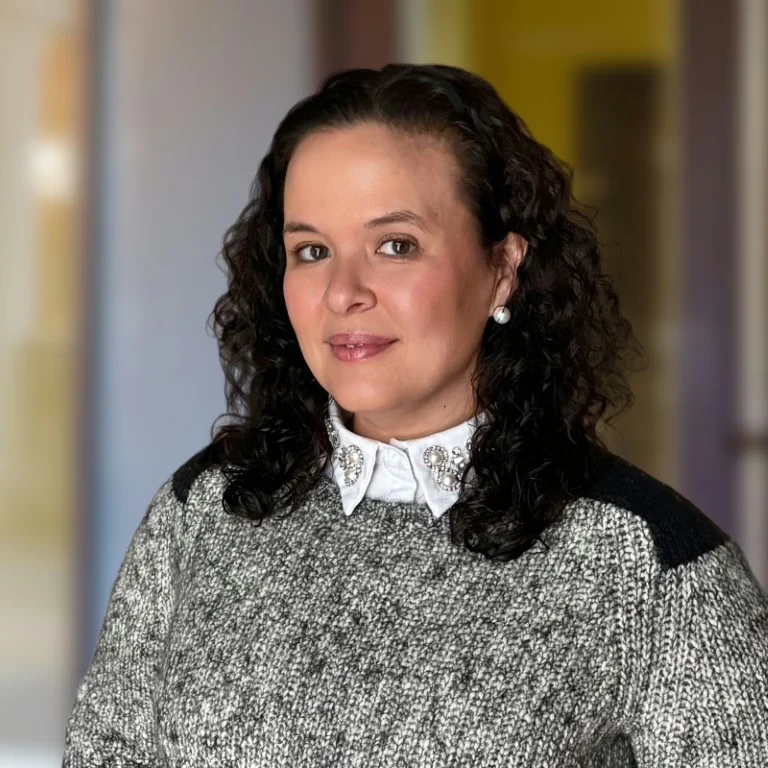
Chief Clinical Officer, Radix Recovery
You do not have to arrive motivated, or even sure you want to quit. Ambivalence is exactly where motivational interviewing works, and exactly why it is worth one confidential call.
MI meets people exactly where competitors’ confront-and-lecture models lose them. It tends to help most if you recognize yourself here:
If most of these are familiar, anxiety dual diagnosis treatment is likely the right fit. Our admissions team can talk it through with you, confidentially.
Speak With Admissions Now(319) 270-2890(319) 270-2890From the first call into detox. The MI style keeps you engaged when ambivalence is highest.
Daily, in every conversation. Individual and group sessions are MI-informed, drawing out your reasons for change.
Where motivation dips. As you take on real-life demands, MI re-engages you at the exact points it tends to fade.
Renewed, never assumed. Check-ins and alumni conversations stay collaborative for the long run.
Levels of care are places; the MI style is the thread that runs through all of them.
Therapy runs through every level. There is no ‘you are here’ marker, because the MI style is everywhere on this continuum. The level of care changes; the collaborative, evocative conversation stays the same.
Most clinical → Independent
3 to 7 days of physician-led withdrawal management with 24/7 nursing. Learn about alcohol detox and drug detox in Iowa.
30, 60, or 90-day pathways with structured daily programming. Learn about inpatient rehab in Iowa.
4 to 8 hours of clinical programming daily with off-site living. Learn about PHP in Iowa.
3 days per week, 9 to 20 hours, built around work and family. Learn about IOP in Iowa.
Weekly therapy and relapse prevention. Learn about continuing care in Iowa.
An ongoing community of Radix community members across Iowa. Learn about our alumni program.
Radix Recovery serves residents from across Iowa, including Iowa City, Des Moines, Davenport, Waterloo, Dubuque, and the Quad Cities. Our admissions team coordinates travel and logistics, and treatment outside your home city can help by creating distance from the people and places tied to using.
Our Location
~10 min
~30 min
~1.5 hrs
~1.5 hrs

Radix is a listed treatment provider on Your Life Iowa, the official addiction-help resource run by the Iowa Department of Health & Human Services.
Across the Radix clinical leadership team, from the founding partners to the chief clinical officer.

Across client reviews of admissions, counseling, detox, and residential care.
The national standard for safety, treatment quality, and staff training in healthcare.
Motivational interviewing (MI) is a collaborative counseling style that helps resolve your ambivalence about substance use by drawing out your own reasons for change, rather than lecturing or confronting you. It was developed by William Miller and Stephen Rollnick and is one of the most established evidence-based approaches in addiction treatment.
Yes. MI is firmly evidence-based for substance use. NIDA lists motivational approaches among the behavioral therapies that work, and SAMHSA dedicated an entire federal protocol, TIP 35, to motivational counseling in substance use treatment. It is especially effective at engaging people who are ambivalent or were pushed into treatment.
MI is the underlying collaborative communication style, used flexibly across every conversation. MET is a specific, structured, time-limited protocol, usually a few sessions with personalized assessment feedback, built on the MI style. If you are looking for that structured protocol, see our motivational enhancement therapy page.
OARS is the core MI skill set: Open questions that invite reflection, Affirmations that recognize your strengths, Reflections that mirror back what you have said, and Summaries that pull your own reasoning together. Together they help you hear and build on your own motivation for change.
The primary goal is to resolve ambivalence and strengthen your own motivation and commitment to change. Rather than imposing reasons to quit, MI draws out the reasons that are already yours, because change that comes from within is far more durable than change argued from outside.
Motivational interviewing was first described by psychologist William R. Miller in 1983 in his work with problem drinking, and was developed further with Stephen Rollnick. Their book, Motivational Interviewing: Helping People Change, is now in its fourth edition.
Change talk is any statement you make that leans toward change, your own reasons, desire, ability, or need to change your substance use. MI is designed to gently draw out and strengthen change talk, because hearing yourself voice your own reasons is what builds genuine motivation.
No. MI is not a separate session you book or pay for. It is the clinical communication style woven through every program we offer, from the first admissions call through alumni aftercare, and it is included in every level of care.
MI helps almost anyone, but it is especially powerful if you were pushed into treatment, have been lectured before, feel genuinely ambivalent, are carrying shame after a relapse, have co-occurring mental health conditions, or stalled mid-treatment. It meets you exactly where you are.
In most cases, yes. Because MI is woven into your clinical care rather than billed as a separate service, it is covered as part of your level of care. We are in-network with Wellmark BCBS, TriWest, Midlands Choice, Cigna, Health Choice, and Medical Associates; one call verifies your benefits.
You do not have to be sure, or motivated, or ready to quit today. You only have to be willing to talk, and we will take it from there.