
You probably arrived here having typed a word at yourself. Something has gone wrong in how the household runs; you are the one holding it together, and somewhere you read that this has a name.
Before the list of signs, one thing worth knowing. The word is argued over by the people who study it, and the federal clinical guidance on treating families affected by addiction tells clinicians to avoid using it about family members. That is not a technicality. It changes what you should be looking for.
This chapter is about what actually happens inside a family living with someone else’s substance use, which patterns are worth taking seriously, what changes them, and when drug or alcohol rehab may be appropriate. Our parent guide on how to help an addict covers the wider ground.
What Codependency Means, and Why Clinicians Argue About It

A Contested Construct With Real Distress Behind It
Codependency has no single agreed definition. A 2026 integrative review in Clinical Psychology and Psychotherapy examined 30 studies published between 2013 and 2024 and found the term “conceptually fragmented,” carrying at least six competing conceptual perspectives, from sociocultural to psychoanalytic to addiction-based [1]. It is also not a diagnosis. There is no entry for it in the diagnostic manual clinicians use.
What the same review did find, consistently, is that the pattern people point at when they use the word is associated with emotional distress, disrupted identity and impaired relational functioning [1]. So the label is unstable, and the suffering is documented. Those two facts sit together more comfortably than you might expect.
The practical version: codependency refers to something real about how you are living. It does not describe a defect in you; it is not a mental illness, and it is not a condition you have caught. Nobody is a codependent person the way somebody is diabetic.
Why SAMHSA Tells Clinicians Not to Use the Word About You
SAMHSA’s treatment protocol on substance use disorder treatment and family therapy is direct with clinicians on this point. It instructs them to “avoid blaming, shaming, and using judgmental labels (e.g., referring to family members as ‘co-dependent’ or ‘enablers’) when working with families” [2].
The people whose job is treating families like yours have been told the label is unhelpful, because it relocates the problem into the personality of the person who has been coping. What the same protocol asks them to look at instead is the family system: communication, conflict, parenting, cohesion, and the household’s shared attitudes about substance use [2]. Those are describable, and they are changeable.
Patterns Worth Noticing in a Family Living With Addiction
Because codependency has no agreed diagnostic criteria, the following are better treated as patterns worth examining, not a checklist that determines whether you “have codependency.” Some are common adaptations to living with instability, and some may be necessary for safety for a period of time.
In How You Spend Your Time
- Frequently checking on the person’s whereabouts, substance use, spending, or physical condition
- Managing what different relatives, employers, or friends know about the situation
- Repeatedly taking over responsibilities that substance use has disrupted
- Organizing more and more of your schedule around predicting or responding to another person’s condition
In How You Feel
- Closely monitoring the other person’s mood while losing track of your own
- Feeling responsible for outcomes you cannot actually control
- Feeling guilty when you spend time or money on yourself
- Remaining tense even during periods when nothing is actively wrong
- Feeling as though the household would collapse if you stopped managing everything
In What Has Narrowed
- Less contact with friends or relatives because explaining the situation has become exhausting
- Your own medical, mental health, work, or personal needs repeatedly being postponed
- Hobbies, travel, rest, or plans disappearing from your life
- Increasing difficulty saying no or allowing another adult to experience the consequences of their own choices
None of these patterns by itself proves codependency. The more useful questions are whether the behavior is still necessary, whether it is helping, whether it is safe, and what it is costing your health and functioning. If they are refusing help altogether, how to help an addict in denial covers the months in between. If conversations have stopped landing, a structured drug intervention, with or without an addiction interventionist, is the next step rather than the first.
Patterns That May Appear Between Partners
When substance use affects an intimate relationship, the practical and emotional overlap between partners can make unhealthy patterns difficult to recognize. Research on codependency has described themes such as excessive self-sacrifice, blurred boundaries, loss of identity, and relational distress, but these are not diagnostic criteria [1].
Patterns worth examining can include:
- Spending more time defending your partner’s potential than describing what the relationship is like now
- Avoiding reasonable disagreements because you fear what will happen afterward
- Feeling guilty for having needs, limits, anger, or resentment of your own
- Finding that your self-esteem or sense of stability increasingly depends on your partner’s mood or behavior
- Losing contact with your own friendships, interests, values, or priorities
- Being able to describe your partner’s needs in detail while struggling to identify your own
These patterns can occur for many reasons, including chronic stress, fear, caregiving demands, trauma, or abuse. The useful question is not whether they prove codependency, but whether the relationship still leaves room for both people’s safety, autonomy, and needs.
Codependent, or Just Coping With Something Hard?
There is no clinical cutoff that separates ordinary coping from “codependency.” Six weeks, six months, or three years does not diagnose the difference.
A more useful approach is to ask whether the way you are coping is still flexible and helping:
- Persistence: Has a crisis response gradually become the normal way the household operates?
- Flexibility: Can you step back when a situation is safe, or do you feel compelled to monitor, fix, or manage regardless of what is happening?
- Cost: Are your own health, work, friendships, sleep, finances, or other responsibilities being repeatedly sacrificed?
- Autonomy: Do you still have interests, relationships, goals, and decisions that belong to you?
- Function: Is what you are doing reducing harm, or has it begun protecting another adult from consequences while exhausting you?
These questions do not diagnose codependency. They help identify coping patterns that may deserve attention, regardless of which label you use.
Codependent Versus Interdependent Relationships
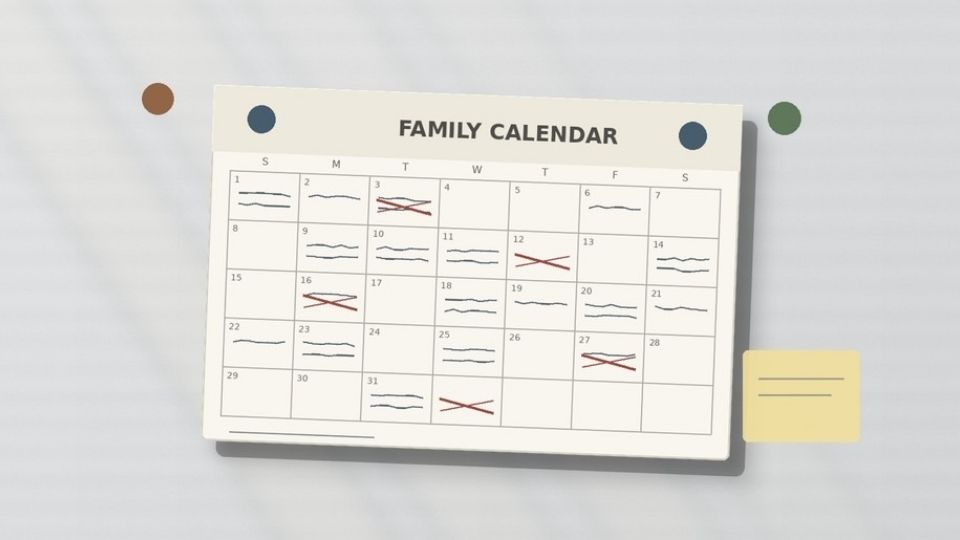
The comparison most often drawn is with interdependence, and it is a fair one. In a healthy relationship, or an interdependent relationship if you prefer the clinical phrasing, there is mutual support, and both people keep a separate sense of self: own needs, own friends, own opinions, own bad days that are allowed to be their own. The older literature sometimes called the compressed version relationship addiction, which is a phrase worth knowing and not worth adopting.
A codependent relationship compresses that. One person’s self-worth and self-identity become contingent on the other’s state. Healthy boundaries blur, one person carries too much responsibility, and the relationship stops having two people in it in any practical sense. Codependent tendencies are the habits that hold the compression in place: monitoring, absorbing, smoothing, and treating your own emotions as the least urgent thing in the room.
Where addiction is involved, there is a further wrinkle. Some of the compression is not a relational choice; it is a safety response. Somebody does have to hold the bank card. The question is whether that arrangement is still doing a job or has simply become the shape of the household.
Why It Develops, and Why It Is Not a Character Flaw
Learned Behavior and Childhood Experiences
Some theories of codependency focus on developmental experiences. A child growing up around unpredictability, conflict, illness, substance use, or inconsistent caregiving may learn to monitor other people’s moods, avoid conflict, take on extra responsibility, or keep their own needs quiet because those strategies help the household function at the time.
The 2026 review suggests that some behaviors later labeled codependent may be better understood as coping strategies that were adaptive in an earlier relational environment [1]. That does not mean childhood adversity inevitably produces adult codependency. Development is influenced by many factors, and people with similar childhood experiences can have very different adult relationships.
The useful point is that a behavior can make sense in the environment where it began and still become costly later.
Family Dynamics That Set It Up
Dysfunctional family dynamics is a clumsy phrase for something ordinary: a household where one person’s state sets the weather, and everyone else adjusts. Where a primary caregiver was unwell, absent or unpredictable, children learn to maintain relationships by managing them.
Those unhealthy patterns are rarely anybody’s plan. They are what a family builds when the alternative is chaos, and other family members often adopted their own versions of the same strategy. When several members suffer quietly and separately, nobody gets a clear view of the whole.
Attachment and Relationship History
Attachment is another theory researchers have used to understand some of the patterns described as codependency. Earlier experiences of inconsistent or unsafe relationships may influence how some people approach closeness, reassurance, abandonment, or caregiving later in life.
But the evidence is not settled. The 2026 review includes developmental and attachment-informed explanations while also noting inconsistencies in attachment-related findings [1]. It would therefore be too simple to say that a particular attachment style causes codependency.
If old relationship experiences seem relevant, they can be useful material to explore in therapy. They are one possible part of the explanation, not a diagnosis or predetermined life story.
The Roles a Family Falls Into
Families under sustained strain tend to specialize. One person manages, one keeps the peace, one performs well enough that nobody has to worry, one disappears, one makes jokes at the worst moment.
You may have read a popular five-role model somewhere. Treat it as a description rather than a diagnostic system, because it is not one. What is documented is narrower and more useful: SAMHSA’s protocol notes that children in these households often take on roles that do not belong to them, giving the example of a teenager who feels he has to become the father of the household [2].
The point of naming roles is not to allocate blame. It is that roles are positions, and positions can be vacated once somebody says out loud what they have been carrying.
What Happens to the Children in the House
This is the section families find hardest and the one most worth reading.
Growing up in a household with substance use problems is counted by the CDC as an adverse childhood experience, alongside physical and sexual abuse, neglect and witnessing violence. ACEs are common rather than exceptional: three in four high school students report at least one, and one in five report four or more [3]. Household substance use is one of the recognized categories, which means the effect on children is measured rather than assumed.
Two things follow, and the second one matters more. First, the children in the house are participants, not bystanders, and their well-being is part of the clinical picture. Second, ACEs research exists because these outcomes are modifiable. A stable adult, an honest explanation pitched at the right age, and access to support change what a childhood like this produces. That is a reason to act rather than a reason to despair.
SAMHSA’s protocol adds a line adult siblings and grown children should read twice: do not overlook the effects on adult children [2]. Being thirty-five does not exempt you.
When It Overlaps With Something Else
Two overlaps are worth ruling in or out rather than absorbing.
The first is your own mental health. Sustained caregiving strain, sleep loss, and hypervigilance look a great deal like anxiety and depression, and sometimes they are anxiety and depression. When the days start to feel overwhelming rather than merely hard, that is a matter for a mental health professional rather than for self-diagnosis, and getting professional help for it is not a distraction from the family problem.
The second is abuse. Some of what gets filed under codependent behavior is a reasonable response to a person who is frightening. If there is intimidation, coercion, or abusive behavior in the relationship, the frame is safety rather than relational patterns, and the priority order changes completely. Talk to a domestic abuse service rather than to a family therapist first. Your Life Iowa can help you find one, and will not require you to name the situation a particular way before it does [5].
What Actually Changes It
Family Therapy With Evidence Behind It
SAMHSA’s protocol states that family-based interventions for substance use disorders “are supported by empirical evidence and have been shown to be effective in promoting long-term behavior change,” and names specific approaches including behavioral couples counseling, functional family therapy, brief strategic family therapy, and multidimensional family therapy, the last with good support in adolescents [2].
That matters because it moves the answer away from insight and toward practice. Nobody talks themselves out of a three-year pattern. Approaches like these change what happens on a Tuesday. Family therapy for addiction is the general name for this work, and internal family systems therapy is one modality some families find fits, particularly where the pattern is old.
The Finding That Matters Most
One of the better-studied approaches for family members whose loved one is refusing treatment is Community Reinforcement and Family Training, or CRAFT. A 2020 systematic review in Addiction included 14 studies, 20 treatment conditions, and 691 concerned family members. Across controlled comparisons, CRAFT approximately doubled the likelihood that the treatment-refusing person entered addiction treatment [4].
That finding matters because CRAFT gives family members something they can work on without waiting for another person to become ready. It teaches specific ways of responding to substance use, reinforcing healthier behavior, communicating, protecting one’s own well-being, and encouraging treatment.
It does not mean the family caused the addiction or controls whether the person recovers. Nor does the evidence establish CRAFT as the one best treatment for every family. Most studies included in the review were methodologically weak, and the authors described parts of their analysis as exploratory [4].
The review also found wide variation by program format. Multimodal programs combining individual and group work had some of the highest treatment-entry rates, while self-directed workbook approaches generally produced lower rates [4]. If you are interested in CRAFT specifically, ask whether a provider actually offers the model and what training the clinician has received.
What Codependency Treatment Actually Involves
There is no codependency treatment in the sense of a protocol for a diagnosis, because there is no diagnosis. What exists is relationship therapy and family work aimed at the specific patterns, usually some combination of these:
- Individual therapy, to rebuild one’s own sense of what you want and to challenge the negative thoughts that make asking feel dangerous
- Couples therapy, where the person using is a partner and is willing, and where safety allows it
- Family sessions that include other family members rather than treating one person as the problem
- Skills work on how to set boundaries and keep them, which is practice rather than insight
Expect some difficulty adjusting early on. Stepping down from a role you have held for years leaves a gap before it brings relief, and the people involved will test the change before they trust it. That is a normal part of the path forward rather than a sign it is not working.
Support Groups
Al-Anon, Nar-Anon, and Codependents Anonymous all exist for this, and they are free. What they offer is the specific relief of being in a room where you feel accepted, and nobody needs the situation explained. Many people use a group and a therapist together rather than choosing, and some find the group is where they first spend time on themselves without apologising for it.
Six Things You Can Do This Month
Small and repeatable beats comprehensive and abandoned. None of these require anyone else to change, and each one puts a small amount of attention back on your own wants and emotional needs.
- Put one appointment of your own in the calendar and keep it, even if the week goes badly
- Tell one person outside the household the true version
- Pick one thing you have been managing and stop managing it, chosen for being small rather than for being important
- Ask a treatment provider directly whether they run a family track, and whether you can start before your loved one agrees to anything
- Notice once a day what you want, without needing to act on it. If nothing comes, that is the finding
- Stop making excuses for one thing, to one person, and see what happens. A co-worker is an easier place to start than a relative
Deciding which supports to withdraw and which to keep is a separate and harder question, worked through in the chapter on how to help an addict without enabling.
Where to Start
You do not need your loved one’s agreement or participation to begin, and waiting for it is the most common reason families lose a year.
Where drinking is the substance, how to talk to someone about their drinking handles that conversation. Where a mental health condition sits alongside the substance use, ask specifically about dual diagnosis treatment, and ask what family education for addiction treatment is included.
Codependency and Addiction FAQs
Is codependency an official diagnosis?
No. It appears in no diagnostic manual, and a 2026 integrative review of 30 studies found the term conceptually fragmented, carrying at least six competing definitions. What the same review did find consistently was real distress behind it, including disrupted identity and impaired relationships. The experience is real even though the label is contested.
Can the family get help if the person using refuses treatment?
Yes, and this is the most useful thing on the page. Structured programs that teach relatives specific behaviors at home roughly doubled the rate at which a refusing relative later entered treatment, in a review pooling 14 studies and 691 family members. The family goes first, and the outcome improves for everyone.
Can you be codependent when nobody in the house is addicted?
The pattern people describe with that word is not confined to addiction, and researchers disagree about whether addiction is required at all. If your sense of self runs through managing somebody else’s problems, the distress is the same whatever the cause. Therapy that addresses the pattern does not require a diagnosis in anybody else.
Sources
- Molina E, Taiwo AO, Grey B. Co-dependency Revisited: An Integrative Review of Conceptualizations and Mental Health Outcomes. Clinical Psychology and Psychotherapy. 2026;33(2):e70265. https://doi.org/10.1002/cpp.70265
- Substance Abuse and Mental Health Services Administration. Substance Use Disorder Treatment and Family Therapy. Treatment Improvement Protocol (TIP) Series, No. 39, updated 2020. https://www.ncbi.nlm.nih.gov/books/NBK571078/
- Centers for Disease Control and Prevention. About Adverse Childhood Experiences. https://www.cdc.gov/aces/about/index.html
- Archer M, Harwood H, Stevelink S, Rafferty L, Greenberg N. Community reinforcement and family training and rates of treatment entry: a systematic review. Addiction. 2020. https://onlinelibrary.wiley.com/doi/abs/10.1111/add.14901